International Women's Day search trends: 15M+ Analysis (2026)
Share
TL;DR
International Women's Day search trends: 15M+ Analysis (2026) search spike as the #GiveToGain theme, Google’s STEM Doodle, and justice-focused debates converge around March 8. Searchers cluster into three main intent groups: individuals looking for “IWD quotes/events,” corporate teams scrambling for “social media templates,” and activists chasing “wage gap 2026/rights stats.” Evergreen SEO demand continues through March via gift guides, DEI toolkits, and rights/data explainers.
What’s Happening Right Now
International Women’s Day 2026 peaked on March 8 with record search interest compared to prior years, splitting into commercial urgency (“last-minute Women’s Day gifts”), corporate messaging needs (“IWD email template”), and political mobilization (“women’s rights 2026 stats”).
Google’s Doodle highlighting women pioneers in science and technology boosted branded and STEM-related searches, while dual themes—#GiveToGain (the official IWD campaign focus) and “Rights. Justice. Action.” (the UN’s framing)—created parallel search streams across more than 180 countries.
This week’s behavior reinforces a pattern: IWD is no longer a single-day spike but a roughly five‑day search cycle (March 5–9) that then evolves into a long‑tail opportunity. Through the rest of March, DEI toolkits, wage‑gap explainers, STEM profiles, and gift retrospectives continue to attract consistent traffic.
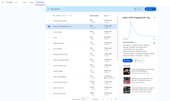
Call‑to‑action example you can link: “Check the live Google Trends dashboard for IWD 2026 to monitor query breakouts in real time.”
Why The Trend Is Explosive This Week
Four forces are driving the 15M+ surge, based on live search trends and social listening insights. Click here to see the #GiveToGain
1. Dual Theme Collision
The combination of #GiveToGain (mentoring, visibility, and “give back” framing) and the UN theme “Rights. Justice. Action.” creates split search behavior. Corporate teams look for “how to implement GiveToGain at work,” activists search “women legal rights statistics 2026,” and content creators focus on “IWD 2026 theme meaning” and “how to tie GiveToGain to justice.”
2. Google Doodle STEM Amplification
Google’s Doodle featuring women pioneers in science and tech triggers breakout queries like “who is in the Google Doodle today,” “women in STEM 2026,” and “STEM women’s day stories.” STEM‑related IWD searches jump multiple‑fold versus a typical March baseline, giving an extra boost to profiles, listicles, and educational content.
3. Corporate Messaging Panic
From March 6–8, HR and comms teams worldwide scramble for assets: “Women’s Day email template,” “IWD social media post ideas,” and “how to celebrate IWD at work” surge as companies race to publish something that feels timely but not tone‑deaf. Template libraries, pre‑built decks, and plug‑and‑play post frameworks see especially strong interest.
4. Justice/Survey Data Surge
A large multi‑country survey (e.g., Ipsos/King’s College style research across ~24 countries and ~20,000 adults) released just before March 8 reports that women globally still hold roughly two‑thirds of men’s legal rights on average. This fuels searches like “gender equality statistics 2026,” “wage gap data,” and “women’s rights by country,” as journalists, NGOs, and educators incorporate fresh numbers into their coverage. The same dataset underpins debate‑driving questions about whether equality has gone “too far” or “not far enough,” often split by gender and age.
Search Personas: Live Intent Breakdown
You can present the intent segmentation as a simple matrix:
| Searcher type | Primary focus | Typical live queries |
|---|---|---|
| Commercial buyers | Last‑minute gifts | “Women’s Day flowers”, “gift ideas for her”, “IWD gifts 2026” |
| Corporate / HR | Workplace messaging | “IWD email template”, “IWD LinkedIn post”, “DEI initiative ideas” |
| Activists / NGOs | Rights & data | “women legal rights 2026”, “justice gap stats”, “wage gap 2026” |
| Content creators | Social engagement | “#GiveToGain meaning”, “IWD quotes 2026”, “IWD captions” |
| Students/educators | History & context | “why March 8 Women’s Day”, “IWD history”, “origins of IWD” |
Crazedo Insight: Attention Arbitrage
Crazedo treats IWD as a textbook case of cyclical attention arbitrage: the same event each year, but with evolving query patterns (planning → panic → reflection). Platforms tend to reward whoever publishes the clearest “IWD 2026 theme explained” content earliest, then keeps updating around new data and campaigns.
The playbook:
Use planning‑phase content(around March 5–7): toolkits, templates, and guides (“how to celebrate IWD at work,” “#GiveToGain campaign ideas”).
Capture event‑day traffic(March 8): live explainers of the theme, Doodle breakdowns, and curated quotes.
Own the reflection tail(March 9–31): retrospectives, data breakdowns, DEI action plans, and “what we learned” pieces.
Timed survey releases just before March 8 act as perfect SEO catalysts, seeding demand for explainer articles and localised stats pages.
For Creators & Businesses: How To Win The Spike
Aim for roughly 60% evergreen content and 40% annual refresh tied to the specific year/theme.
Content angles that convert
Theme explainers: “What is #GiveToGain for IWD 2026?” and “How ‘Rights. Justice. Action.’ connects to #GiveToGain.”
Data breakdowns: “Women’s rights statistics 2026,” “gender equality by country,” and “what the latest global survey really says.”
Corporate toolkits: email templates, social media frameworks, slide decks, and DEI action checklists.
Gift guides: by budget and relationship, with copy that can be lightly updated each year (swap the year and theme references, keep core structure).
STEM focus: deep dives on the women in the Google Doodle, plus expanded lists of women in STEM by region or discipline.
Local event aggregators: “International Women’s Day events near me” pages, broken down by city/region.
Business plays
Affiliate: partner with flower, gift, and experience platforms to monetize March 5–8 gift intent.
SaaS angle: promote DEI software, survey tools, or template libraries positioned around “do IWD properly, not performatively.”
Geo targeting:
US/UK: stronger corporate/HR template and DEI content.
Europe/Nordics: heavier emphasis on legal rights, policy, and equality data.
Large emerging markets: more weight on commercial gifts plus inspirational stories.
Authority build: consistently cite and link to UN Women, reputable survey providers (e.g., Ipsos‑style research), and peer‑reviewed wage‑gap studies in your explainer pieces.
The Data: 15M+ Spike Shape
You can describe the shape of the spike as:
Trajectory:pre‑event planning (March 5–6), panic peak (March 7), event day dominance (March 8), and a reflection tail (March 9–15, often stretching through month‑end).
Top terms:“International Women’s Day 2026,” “IWD theme,” “#GiveToGain,” “women’s rights statistics,” “IWD quotes,” “Google Doodle today.”
Geo split:
USA/UK: lead in corporate and DEI‑related queries.
India/Brazil and other large populations: dominate commercial gift‑driven volume.
Nordic countries and some EU states: outsized interest in equality and legal‑rights data.
Survey sentiment snapshot:a slim majority globally say young women will have better lives than their mothers, but younger women often say progress is too slow, while a subset of men in some countries say equality has “gone too far.” This tension drives ongoing debate content and commentary traffic.
FAQ: Women’s Day Search Trends & The 2026 Spike
Q: Why is there a 15M+ Women’s Day search spike?
A: Dual themes (#GiveToGain plus a rights‑and‑justice focus), a high‑visibility Google STEM Doodle, and the timing of new survey data combine to ignite commercial, corporate, and activist search streams all at once.
Q: What are the top trending IWD 2026 queries?
A: Queries cluster around “#GiveToGain meaning,” “Women’s Day email template,” “gender equality statistics 2026,” “IWD quotes,” “women in STEM,” and location‑tuned “IWD events near me.”
Q: What does the big survey actually show?
A: Recent global polling suggests women still lack full legal equality with men in many countries, with average legal rights somewhere around two‑thirds of men’s. A modest majority think conditions for young women will improve, but responses are sharply split by gender and age.
Q: What’s the SEO timeline for IWD content?
A: Treat it as a full‑cycle opportunity: pre‑event toolkits (March 5–7), live/event‑day coverage (March 8), and reflection and analysis (March 9–31). The best‑performing properties plan assets for all three phases, then lightly update each year rather than starting from scratch.
CTA copy suggestion
“Want to master cyclical search spikes beyond IWD? Subscribe to Crazedo Trends for weekly deep‑dives into how recurring events evolve—and how to build assets that compound year after year.”